
Weekly Market Overview#
Gold changed direction; the discipline was knowing what to keep and what to close. Across October 12–16, 2026, Gold Trader Mo’s public record moved from sell-target progress early in the week to buy-side opportunities later. The common thread was not a permanent bearish or bullish call. It was a sequence readers could inspect: a plan, changing exposure, reported targets and the last update on what remained open.
Tuesday’s first sell reached a fourth fixed-target report and still had a runner described as running late in the session. Thursday’s first buy also reported four targets, but finished with no positions left open. Friday’s first buy reported three targets before the remaining entries exited at entry. Those are different endings—not interchangeable versions of a winning screenshot.
To follow new public updates rather than chase these historical entries, visit Gold Trader Mo, follow @GTMO, and message @GTMOBest about free gold-signal access and support. Check the current access conditions directly.
What Drove Gold This Week#
The broader market backdrop helps explain why a fixed one-way view would have been difficult. Reuters described dollar and oil pressure early in the week, an inflation-driven decline on Wednesday, and a rebound as the dollar and Treasury yields eased on Thursday. By Friday, traders were still weighing inflation and the Federal Reserve’s rate path. That is market context, not proof that a particular news item caused any of Mo’s individual entries.
The following are Reuters’ dated spot observations, in US dollars per troy ounce. They are not daily closing prices, and their observation times differ.
| Trading date | Reuters spot observation | Source-stated time, GMT | Reading the week |
|---|---|---|---|
| October 12 | $4,169.10 | 17:45 | Early-week pressure |
| October 13 | $4,157.90 | 18:15 | Gold subdued ahead of US inflation data |
| October 14 | $4,083.94 | 18:05 | Sharp decline as hot inflation data lifted rate-hike expectations |
| October 15 | $4,153.42 | 18:01 | Rebound alongside a weaker dollar and lower Treasury yields |
| October 16 | $4,165.12 | 18:07 | Gold largely steady while rate-path uncertainty remained |
Sources: Reuters’ Monday report, Tuesday report, Wednesday report, Thursday report and Friday report.
Wednesday’s report put spot gold down 1.8% at its observation time. Thursday’s report described a 1.2% rise; Friday’s said gold was down 0.7% so far that week. These are source-stated changes at those moments, not a finalized weekly return calculated from this table. December gold-futures settlements are a different instrument and are not substituted for spot closes here.
The Daily reports also retain their earlier TradingView/OANDA observations while the market was open. Friday’s $4,189.060 OANDA reading at 21:01:58 Vietnam time, for example, preceded Reuters’ 18:07 GMT observation. Different timestamps and sources should not be mistaken for contradictory final closes. This recap does not claim a weekly high, low or open-to-close return.
Weekly Performance Snapshot#
The useful comparison is how each public sequence progressed and ended—not how many update messages appeared.
| Session | What the public record supports | Important distinction |
|---|---|---|
| Monday, October 12 | The afternoon sell reported three targets; remaining entries later exited at entry | Mo also acknowledged an earlier failed setup; the recovery statement is his reported account |
| Tuesday, October 13 | Two public sells: four fixed targets on the first, three on the second | A late first-sell runner was still reported open; no final runner exit was supplied |
| Wednesday, October 14 | The morning sell reached a fourth-target report; later buy-side posts described an upward burst | The later buy was shared after entry, not a second detailed advance public plan |
| Thursday, October 15 | First buy: four targets, then the remaining entries out; second buy: partial profits and an exit at entry | The second setup did not have a confirmed completed target ladder |
| Friday, October 16 | First public buy: three targets, then the remaining entries out at entry | The later $19,500+ daily claim cannot be assigned entirely to that first setup |
No account-wide weekly profit or win rate is calculated. Multiple positions within a zone, repeated screenshots and management replies are not automatically separate setups. The selected weekly package contains five trading screenshots and five member-posted screenshots, drawn from the five Daily reports. It is a selection, not the full archive or ten independently audited results.
Best Trades and Recovery Moments#
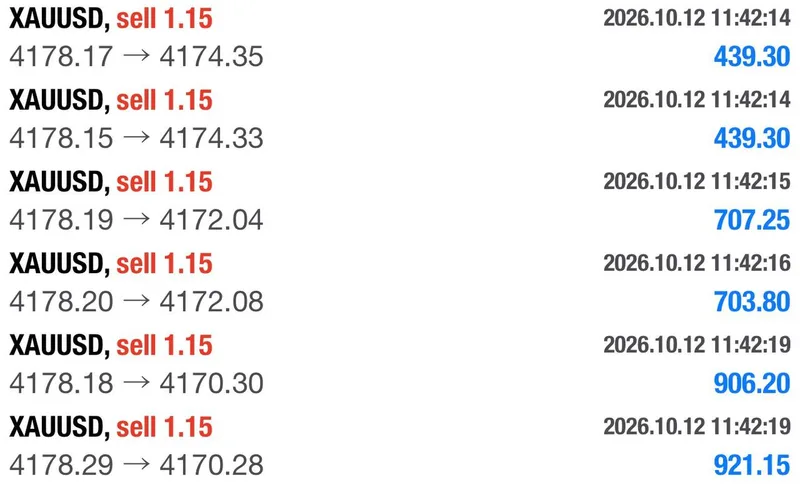
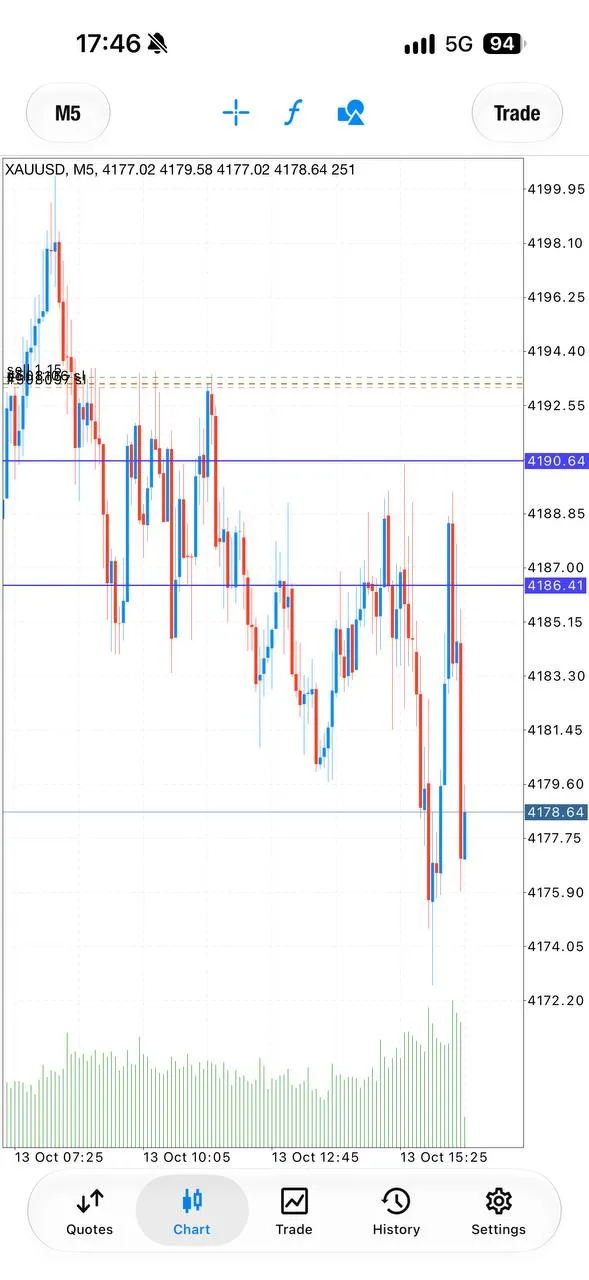
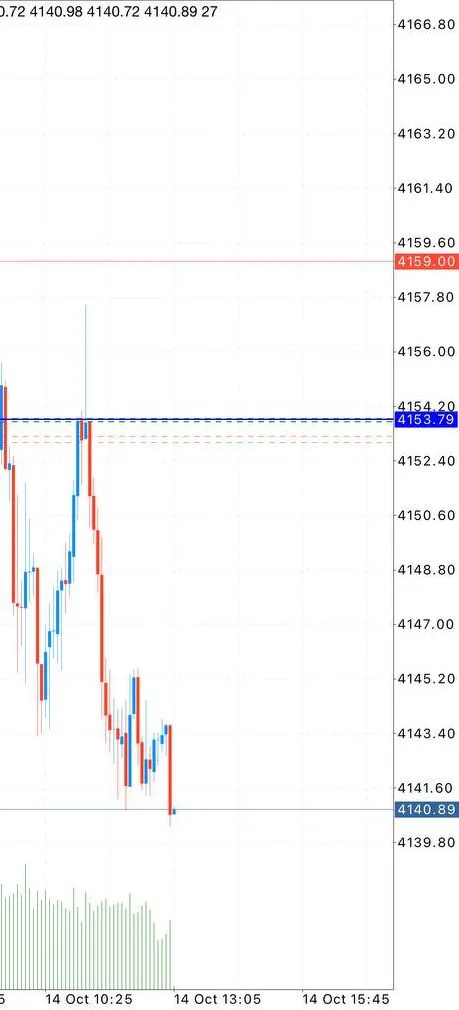
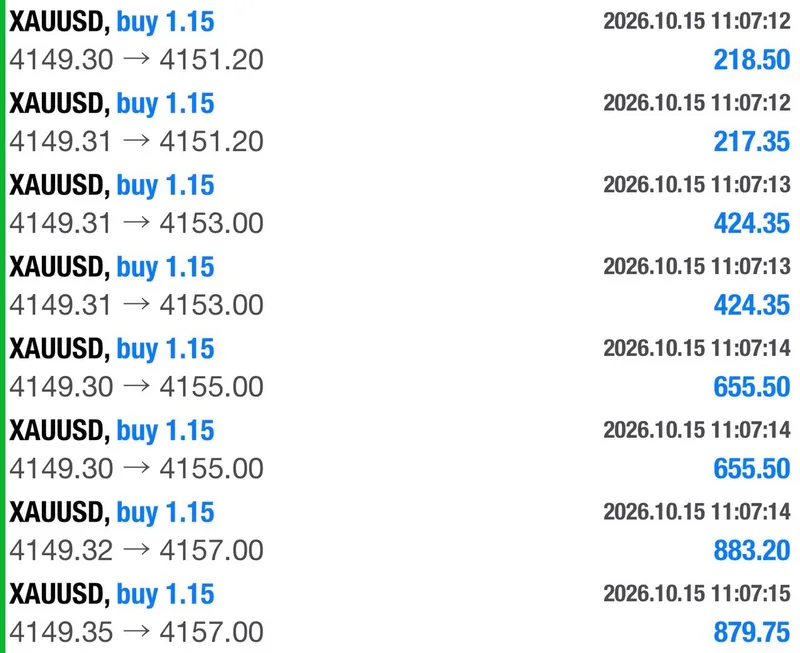
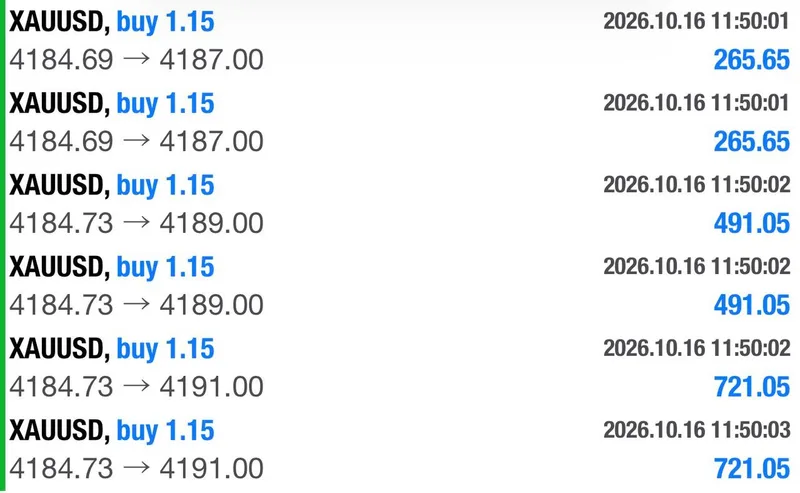
The strongest contrast came between Tuesday’s continuation and Thursday’s different endings. On Tuesday, Mo paired the first sell’s four fixed targets with partial profit-taking and protection instructions, then reported a continuing runner. The second sell had its own three-target finish. Keeping those two accounts separate preserves what was impressive without borrowing one trade’s extension to improve the other.
Thursday’s first buy supplied a fast four-target run. Its final update was more useful than the earlier anticipation of a fifth target: four targets done, no floating trades. The second buy needed a longer period of management around its zone. Mo described taking some profits and limiting re-entries before saying the remaining trades were out at entry. Calling that second setup simply “flat” would erase the partial exits; calling it another four-target run would invent a result.
Monday and Friday provided another recurring lesson: a target report and a later exit at entry can both be true. Earlier partial exits concern exposure already reduced; the final stop concerns what was still open. Neither makes the original risk disappear. The gallery below follows the week’s trading record, with each screenshot’s date and reported stage retained.
Day-by-Day Trading Narrative#
Monday: a setback acknowledged, then a managed sell. The October 12 report follows the afternoon sell through a retracement, partial profit-taking, three target reports and the remaining-entry exit. Mo’s later recovery statement belongs beside the earlier failure—not in place of it.
Tuesday: bearish follow-through, with an unfinished runner. The October 13 report documents two sells. The first reached all four fixed targets in the public updates and later carried a continuing-runner report; the second reported three targets. The lack of a final runner exit is left explicit rather than filled in with hindsight.
Wednesday: a wider stop before the favorable move. The October 14 report shows a sell managed through floating losses, with the stop widened from 4,157 to 4,159 before partial profits, protection and the later fourth-target confirmation. That increased potential loss for an unchanged position size. The later buy burst was part of what followers saw, but not equivalent to an advance public buy zone.
Thursday: speed first, patience second. The October 15 report pairs a four-target first buy with a slower second buy. Both include an explicit finish for remaining entries. The distinction is execution management, not a claim that every buy produced the same outcome.
Friday: three targets, a protected remainder and a separate daily claim. The October 16 report links the first buy plan to its three-target update and final exit. Later management posts belong to another, less fully specified public sequence: they described taking profits and protecting exposure, followed by the remaining trades reportedly exiting at entry by 17:50:48 Vietnam time. That later finish is separate from the first parameterized public setup. Mo’s subsequent “$19,500+ up” is a channel-reported daily claim, not an audited weekly total or the proven profit from one signal.
What Worked, What Failed, and Why#
What worked in the reported sequences was adaptation with visible follow-up. The week offered sell-side follow-through and later buy-side progress, but the communication repeatedly returned to partial exits and protection. Readers could evaluate more than a prediction: they could compare the plan with decisions made while a position was developing.
What did not work uniformly was holding every entry for every planned target. Monday included an acknowledged earlier failure. Thursday’s second buy did not repeat the first buy’s target ladder. Tuesday’s runner had no supplied final exit. These limits belong in the weekly account without turning the whole week into a loss story or a flawless run.
Wednesday’s wider stop deserves attention despite the favorable finish. A successful target report does not demonstrate that increasing risk was always justified. For a follower, position size and the maximum tolerable loss must remain independent decisions. Moving a stop to entry later seeks to reduce exposure; spreads, fees, gaps and slippage still matter.
The weekly lesson is therefore specific: read the entry, management changes and final supported state together. Do not turn a past target into a current order, a reported runner into realized cash, or the channel’s best daily statement into a weekly account return.
Community Proof and Trader Confidence#
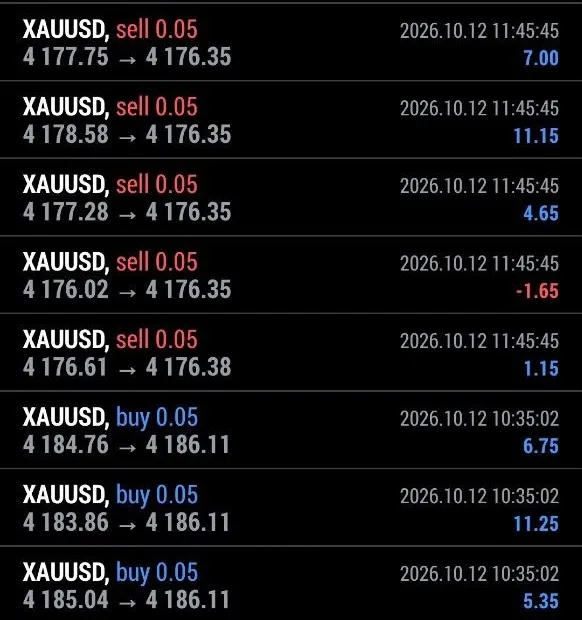
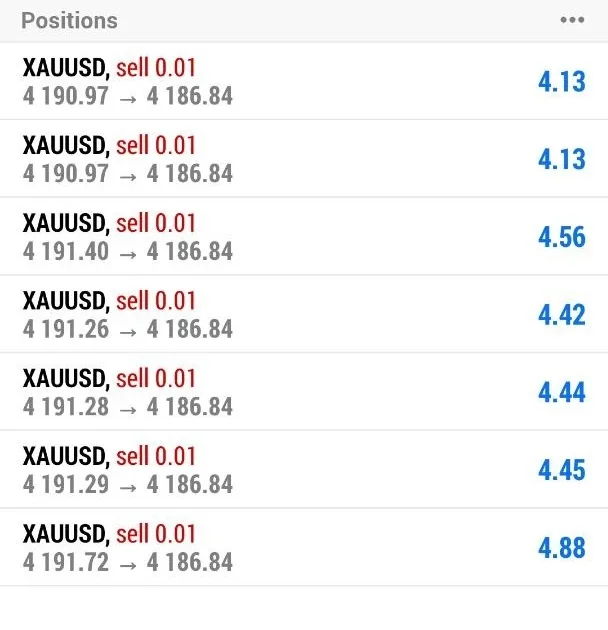
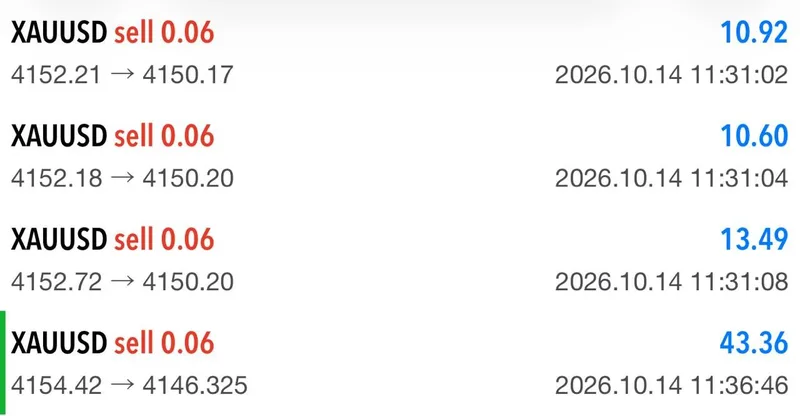
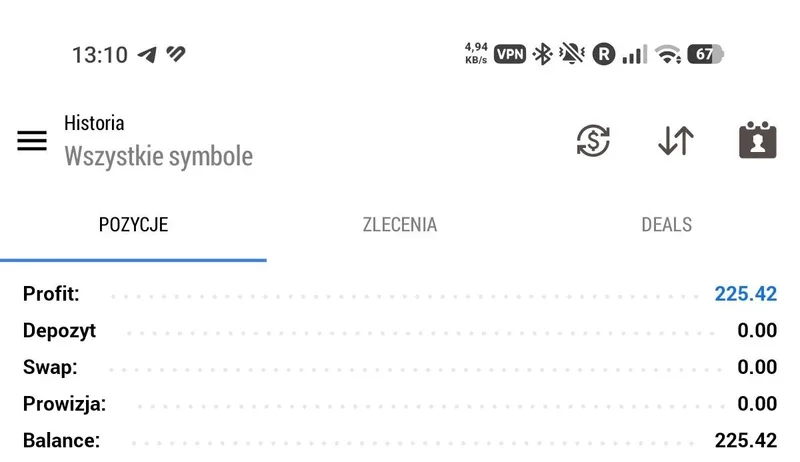
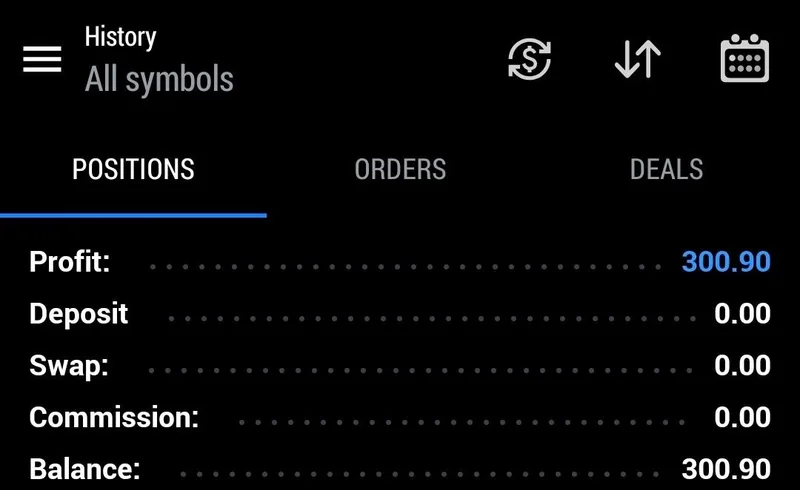
Members’ posts added another perspective: some took profits sooner, some left a remainder, and some valued understanding the reasoning. Monday’s “Out in profit” feedback and Wednesday’s comment about playing it safe show why reaching every final target is not the only possible exit choice.
The selected member images retain their original limitations. Thursday’s Marcin example came with wording covering “today and yesterday,” not Thursday alone. Friday’s Lukas image shows 300.90 without a visible currency or reporting period in the crop. Those figures are not converted into dollars or summed into a weekly total. These are individual public reports, not a survey of all followers or a promise of typical earnings.
The gallery is useful because readers can compare these different choices with Mo’s updates. It does not establish that every member followed the same entries, held the same size or achieved the same return.
Key Levels and Scenarios for Next Week#
The week’s old setup zones are historical references, not fresh support and resistance. Friday’s public buy zone of 4,184.7–4,181 and its target ladder explain that trade; they do not automatically become Monday instructions. A current market assessment is needed before using any level again.
If rebounds continue, the practical question is whether a fresh buy plan defines both confirmation and invalidation before entry. If selling pressure returns, the same standard applies to a new sell: identify the risk first, then watch how exposure changes as the move develops. Neither scenario follows automatically from the last favorable screenshot.
For a separately dated forward-looking view, read the October 19–23 Weekly Gold Forecast: The $4,200 Test. Use the weekly summaries archive for historical comparison and the market-analysis archive for other outlooks. This recap’s contribution is the completed week’s decision record, not an unsupported price forecast.
FAQ#
Did gold finish the week at $4,165.12?#
That was Reuters’ spot observation at 18:07 GMT on October 16, not a finalized daily or weekly close. This article does not calculate a final weekly return from observations taken at different times.
Did Mo report a $19,500+ weekly profit?#
The cited claim was “up today” on Friday. It is retained as a channel-reported daily result, not an independently audited amount, a weekly sum or a result attributable solely to Friday’s first buy.
Why can targets and an exit at entry appear in the same recap?#
Different portions of a position can exit at different stages. Partial profits may have been reported before the remaining entries exit at entry. The last update should be read alongside those earlier decisions, not as a replacement for them.
How can I follow the next public sequence?#
Follow @GTMO and ask @GTMOBest about free access and support. Save the new plan and its updates, assess your own risk, and do not trade from an old weekly recap.
Connect with Gold Trader Mo#
The reason to follow Gold Trader Mo is the opportunity to inspect the plan, the uncomfortable middle and the reported outcome—not just a final result image. Review the linked Daily reports, compare the decisions, then message @GTMOBest for current free gold-signal access and support.
Risk disclaimer: This historical summary is educational commentary, not personalized financial advice or a live trading instruction. Gold and leveraged trading involve substantial risk; capital can be lost. Past performance, channel-reported results and member feedback do not guarantee future returns. Use independent judgment, appropriate position sizing and loss limits.