How to trade gold XAUUSD for beginners starts with one reality: gold is trading near $5,186 per ounce in 2026, and that price action is pulling in a new wave of first-time traders. If you’ve been watching charts and wondering whether you’re already too late, you’re not. You just need a structured starting plan that protects your capital while you learn. One of the fastest ways to understand current market behavior is to study real setups from active reports like Best Gold Trading Signals 2026, then practice those principles on demo before risking live money. This guide gives you the beginner framework used by many new traders in the Gold Trader Mo community.
Disclosure: This article is for educational purposes only. Gold trading involves significant risk. Past performance is not indicative of future results. Always practice on a demo account before trading with real capital.
Gold trading is booming in 2026 for three big reasons: record volatility, strong macro themes, and easier platform access than five years ago. Retail traders can now open small accounts and manage micro-lot risk precisely on MT4/MT5. The opportunity is real, but so is the risk.
What Is XAUUSD and Why Trade Gold?#
XAUUSD is the symbol for gold priced against the US dollar. XAU is the ISO code for one troy ounce of gold, and USD is the US dollar. When XAUUSD rises, gold is getting more expensive in dollars. When it falls, gold is getting cheaper in dollars.
Gold is the world’s most-traded commodity because it sits at the intersection of currencies, inflation, and global risk sentiment. For beginners, this is both a benefit and a challenge. You can build a clear watchlist of drivers:
- Federal Reserve interest rates: Lower rate expectations often support gold.
- DXY (US Dollar Index): A weaker dollar can lift XAUUSD.
- Geopolitics: War, sanctions, and uncertainty often trigger safe-haven demand.
- Inflation expectations: Sticky inflation can increase gold demand as a store of value.
Mapping these drivers before each session helps you avoid random entries.
XAUUSD Basics: Numbers Every Beginner Must Know#
| Specification | Value |
|---|---|
| 1 Pip | $0.10 price movement (e.g., 2500.00 → 2500.10) |
| Standard Lot (1.0) | 100 oz gold = ~$10/pip |
| Mini Lot (0.1) | 10 oz = ~$1/pip |
| Micro Lot (0.01) | 1 oz = ~$0.10/pip |
| Typical Spread | $0.16–$0.37 |
| Recommended Starting Capital | $100–$500 |
| Margin (0.01 lot, 1:500) | ~$10 |
These numbers matter because they translate chart movement into real money. A single pip on XAUUSD is $0.10 in price, and your lot size determines how much each pip is worth in your account.
- 1 Pip = $0.10 movement: If gold moves from 5186.00 to 5191.00, that is 50 pips.
- Lot size controls your risk: A 50-pip loss at 0.01 lot is manageable; the same move at larger size can hurt fast.
- Spread is your transaction cost: If spread is $0.30, your trade starts negative. Your target must be large enough to cover this.
- Capital range $100–$500: You can start around $100, but $300–$500 gives more room for disciplined risk.
- Margin at high leverage: Even small positions require margin allocation, so keep free margin healthy.
Beginners often focus only on entries and ignore position math. Don’t do that. If you master these basics first, your learning curve gets much smoother.
6 Steps: How to Trade Gold XAUUSD#
Step 1: Choose a Regulated Broker#
Your broker choice affects spreads, execution speed, platform stability, and protections. Prioritize brokers regulated by CySEC, FCA, or ASIC.
When comparing options, check three practical points first: typical gold spread during London-New York hours, MT4/MT5 support, and negative balance protection. You also want transparent swap/commission terms and responsive customer support in case of execution disputes.
Before depositing, run a demo and place at least 10 test orders during active sessions to check requotes, slippage, and execution speed.
Step 2: Open and Fund Your Account#
Most brokers offer minimum deposits between $5 and $100, but that is not the same as practical trading capital. For XAUUSD risk control, $100 is the entry point, while $300–$500 is more realistic.
The onboarding process is usually straightforward:
- Register your profile.
- Complete KYC verification (ID + proof of address).
- Choose account type (often Standard, ECN, or Cent).
- Deposit funds using card, transfer, or e-wallet.
Choose the account type with clean gold pricing and avoid complicated bonus structures. Your first goal is skill-building, not size.
Step 3: Set Up Your Trading Platform (MT4/MT5)#
After login, open Market Watch and find XAUUSD. If it’s hidden, right-click and select “Show All,” then add XAUUSD to your favorites. Open a chart and set your core beginner workflow around H1 and M15 timeframes.
A practical setup:
- Use H1 to identify trend direction and key support/resistance zones.
- Use M15 for entry timing.
- Add 1–2 indicators only (for example, EMA and RSI) to avoid analysis paralysis.
Keep charts clean and save the layout as a template so every session starts the same way.

Step 4: Practice on a Demo Account#
Gold is unforgiving when you’re new. XAUUSD can spike quickly around session opens and macro headlines, so demo trading lets you learn without paying tuition to the market.
Commit to at least 10+ demo trades before live money. Track each trade with entry reason, stop-loss location, take-profit plan, and post-trade notes. This creates pattern recognition faster than random chart watching.
Treat demo seriously: use the same lot size and rules you plan to use live. If your demo behavior is sloppy, your live behavior will be worse.
Step 5: Place Your First Trade#
Use this exact beginner sequence on MT4/MT5:
- Click New Order.
- Select XAUUSD.
- Set Volume = 0.01.
- Place Stop Loss = 50 pips from entry.
- Place Take Profit = 100 pips for a 1:2 risk-reward structure.
- Click Buy or Sell based on your setup.
If you risk 50 pips and hit TP at 100 pips, one winner can offset two controlled losses over time. At 0.01 lot, 50 pips is about $5 risk.
After execution, avoid moving your stop impulsively.
Step 6: Apply Basic Risk Management#
The simplest survival rule is the 1% rule: never risk more than 1% of your account on a single trade.
Use this position-sizing formula every time:
Risk Amount ÷ (SL pips × pip value)
Gold’s volatility can punish oversized positions in minutes. Always use stop losses on XAUUSD and predefine your daily max loss.
Best Times to Trade XAUUSD#
| Session | UTC Hours | Volatility | Avg Movement | Beginner Rating |
|---|---|---|---|---|
| Asian (Tokyo) | 00:00–09:00 | Low | <100 pips | ⚠️ Observe only |
| London | 07:00–16:00 | High | 200+ pips | ⚠️ After first hour |
| New York | 13:00–22:00 | Very High | 300+ pips | ⚠️ Need tight stops |
| LDN-NY Overlap | 13:00–17:00 | Peak | 200–500+ pips | ✅ Best for beginners |
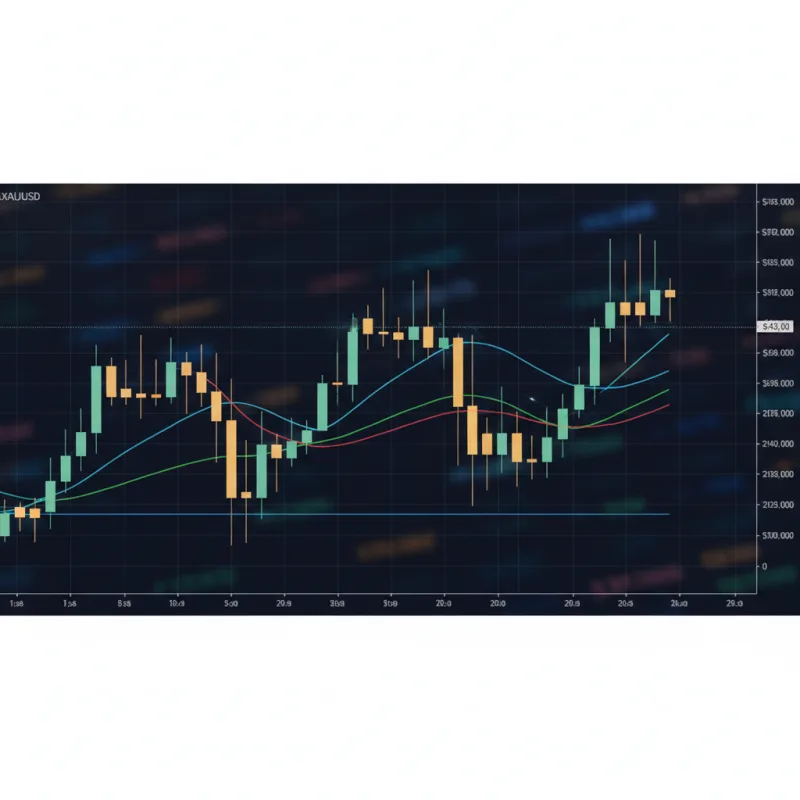
The London-New York overlap is usually the sweet spot because it combines the deepest liquidity with the highest participation. That often means tighter spreads, cleaner continuation moves, and fewer random dead periods compared with thin sessions.
For beginners, this window is easier to learn because direction is often clearer when volume is concentrated.
7 Mistakes That Blow Beginner Gold Accounts#
- Overleveraging — Gold moves $20-50/day. Even 0.01 lot = significant swings. Start micro.
- Ignoring the Spread — Gold spreads can be $0.30+. Your scalp target must exceed 2-3x the spread.
- Trading During Asian Session — Low liquidity = choppy price action = stop hunts. Avoid.
- Holding Through News Events — FOMC/NFP/CPI can spike gold $10-30 in seconds. Close positions before.
- No Stop Loss — Gold's volatility without SL = account wipeout risk. ALWAYS set stops.
- FOMO Chasing Spikes — Don't buy the top of a $20 candle. Wait for pullbacks to structure.
- Overtrading — Max 3-5 trades per day. Set a 3% daily loss limit and walk away.
Every point above comes down to one principle: respect gold’s volatility. XAUUSD rewards discipline and punishes urgency. If you avoid these seven mistakes consistently, your account survival odds improve dramatically.
How GTMO Traders Learn Gold Trading#
At Gold Trader Mo, the focus is education-first execution: understand context, define risk, and trade only when setup quality is clear. The community uses free Telegram updates and daily report breakdowns to study real market behavior.
If you’re building your foundation, start with these existing posts:
- Daily Gold Trading Report — February 21, 2026 — see real trade analysis
- Best Gold Trading Signals 2026 — compare signal providers
- Why Gold Scalping Is Most Profitable in 2026 — learn scalping strategies
For a comprehensive deep-dive, stay tuned for our upcoming complete guide to gold trading.
💬 Have questions? Ask in our GTMO community — experienced traders help beginners daily.
Frequently Asked Questions#
How much money do I need to start trading XAUUSD?#
You can start with as little as $100, but $300-$500 gives more flexibility for proper position sizing and risk management. With a micro lot (0.01), you control 1 oz of gold and risk is manageable. Many regulated brokers offer accounts with no minimum deposit, but practical trading capital still matters.
Is XAUUSD trading profitable for beginners?#
Gold trading can be profitable, but most beginners lose money initially because they underestimate XAUUSD volatility. The key is starting small (0.01 lot), practicing on demo first, and following strict risk management. Daily reports from Gold Trader Mo show that consistency is possible with structure, patience, and realistic expectations.
What is the best timeframe for trading XAUUSD?#
For beginners, H1 (1-hour) and M15 (15-minute) timeframes offer the best balance between signal quality and trade frequency. Avoid M1 and M5 until you’re experienced — gold moves too fast on lower timeframes for new traders and often creates emotional decision-making.
When should I avoid trading gold?#
Avoid trading during: Asian session (low volume, choppy action), 30 minutes before/after major news (NFP, FOMC, CPI), Friday afternoon (weekend gap risk), and any time you’re emotionally compromised. The most beginner-friendly window remains the London-New York overlap (13:00-17:00 UTC).
Is XAUUSD the same as gold?#
Yes. XAUUSD is the forex symbol for gold priced in US dollars. XAU is the ISO 4217 code for one troy ounce of gold, and USD is the US dollar. When you trade XAUUSD, you’re speculating on gold’s price relative to the dollar.
What moves gold prices?#
Gold prices are driven by US Federal Reserve rate decisions (lower rates often support gold), US dollar strength via DXY (weaker dollar often supports gold), inflation expectations, geopolitical uncertainty, and central bank gold purchases. Following these macro drivers is essential if you want entries based on context instead of emotion.
Conclusion#
Gold trading through XAUUSD is accessible in 2026, especially with gold near $5,186 and macro drivers keeping volatility elevated. You do not need a large account to begin, but you do need a disciplined process.
Start small, protect your downside first, and learn gold’s personality: fast, macro-sensitive, and unforgiving when risk is loose. Whether you trade independently during the London-New York overlap or study experienced analysts, consistency beats intensity.
👉 Join @gtmo Free Signals Channel for daily gold analysis and trading signals.
Connect With Gold Trader Mo#
- 🆓 Free Signals: GTMO Trades
- 💬 Support: @gtmobest
- 📺 YouTube: GTMOFX
- 📸 Instagram: mojirjees
- 🌐 Website: Gold Trader Mo
⚠️ Risk Disclaimer: Trading gold (XAUUSD) and following trading signals involves substantial risk of loss and is not suitable for all investors. Past performance, including the results shared in this article, does not guarantee future results. The win rates and profit figures mentioned are historical and may not be replicated. Always use proper risk management, never risk more than you can afford to lose, and consult a qualified financial advisor before trading. Gold Trader Mo provides educational content and free trading signals — it is not a registered investment advisor.
This article is for educational purposes only and does not constitute financial advice.