
1. Market Snapshot — March 3, 2026#
March 3 was the first full “stress test” session after the parabolic move from the prior day. If you read yesterday’s breakdown, March 2 momentum report, you saw how aggressive upside extension had become into overbought territory. Today, the market delivered the other side of that equation: violent two-way volatility, deep intraday liquidation, and conditions where execution quality mattered more than directional bias.
The key context is simple: gold stayed inside a broader macro risk-off backdrop, but price action transitioned from trend continuation to hard correction. That is exactly where many retail traders lose discipline. Instead of pretending this was a clean “win day,” this report documents it as it happened: one early partial winner, three controlled losses, and a transparent closeout framed by risk management.
Market Dashboard#
| Asset / Indicator | March 3, 2026 Read | What It Means for Gold |
|---|---|---|
| XAUUSD (Spot) | $5,124.27 (−$197.70 / −4.32%) | Massive correction day after extreme overbought stretch |
| Session Range | High $5,379.71 / Low $4,996.31 | ~$383 range and ~$349 drop from high to washout low |
| DXY | ~97.8 (trend context) | Structural USD softness still supports gold medium term |
| VIX | Elevated | Fear premium remained active under geopolitical stress |
| US 10Y Yield | N/A — flight-to-safety context | Yield pressure lower supports defensive flows narrative |
| WTI Crude | Elevated (Hormuz risk) | Energy/geopolitical stress reinforces macro uncertainty |
| Fear & Greed | Risk-off tone | Positioning shifted from FOMO to de-risking behavior |
Market Regime: Risk-Off.
Risk-off does not mean “straight line up” for gold. On days like this, risk-off can coexist with violent profit-taking because positioning becomes crowded and stops cascade. That distinction explains why bullish macro narratives and bearish intraday tape can both be true at the same time.
2. Macro Drivers Today#
1) 🟢 US-Iran War Escalation (Operation Epic Fury) — Impact: HIGH#
The geopolitical backdrop remained the dominant macro driver. Joint US-Israel operations that began on Feb 28 continued to define market psychology into March 3. With air-superiority headlines, retaliatory strikes, and disruption concerns around the Strait of Hormuz, traders kept a persistent uncertainty premium in defensive assets.
For gold, this backdrop is structurally supportive because conflict risk raises demand for hedges. However, when the market has already priced a large part of the fear premium, additional headlines can trigger both continuation and abrupt liquidation depending on positioning density.
2) 🔴 Profit-Taking + Technical Correction — Impact: HIGH#
The strongest intraday force was not “new bearish macro,” but a mechanical unwind after a parabolic run into Mar 2 highs near $5,394. Overbought conditions and crowded longs set the stage for a fast downside repricing. The washout below $5,000 intraday was exactly the kind of liquidity event where passive confidence gets punished and active risk management becomes the edge.
From a market microstructure angle, this looked like layered stop-outs and momentum reversal behavior rather than a smooth fundamental repricing. Once the key pivot gave way, reaction speed became more important than prediction accuracy.
3) 🟢 Structural USD Weakness — Impact: MEDIUM#
Even with no exact day-print certainty for every macro metric, the year-to-date dollar softness context remained intact. A weaker broad dollar regime typically underpins metals on a medium-horizon basis, but it does not prevent sharp intraday setbacks when gold is overextended.
Practical takeaway: medium-term tailwinds can coexist with short-term drawdowns. Traders who treat macro narrative as a substitute for execution discipline usually discover this the hard way.
3. Technical Outlook#
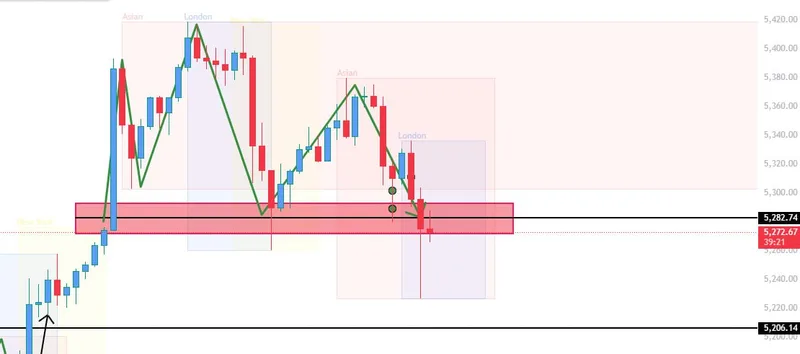
The technical picture on March 3 shifted from “buy dips in trend” to “respect correction momentum until structure repairs.” The break below pivot changed intraday risk calculus and forced traders to stop thinking in one direction.
Key Levels (March 3)#
| Level Type | Price |
|---|---|
| Resistance 3 (R3) | 5,405 |
| Resistance 2 (R2) | 5,333 |
| Resistance 1 (R1) | 5,289 |
| Key Pivot | 5,217 |
| Support 1 (S1) | 5,145 |
| Support 2 (S2) | 5,101 |
| Support 3 (S3) | 5,029 |
Close location: $5,124.27, between S1 and S2 after pivot failure.
Structure & Momentum#
- Pivot status: Broken to downside during session, shifting near-term control to sellers.
- SMA stack: Price traded below 50/100/200 SMA alignment in this correction phase.
- RSI context: Approx. 35–45 zone (neutral-to-oversold), suggesting downside momentum was mature but not automatically “reversal confirmed.”
- MACD: Bearish crossover context supported caution on aggressive long chasing.
Scenario Matrix (Next Session Bias Framework)#
| Scenario | Trigger | Interpretation | Tactic |
|---|---|---|---|
| Bullish Recovery | Reclaim and hold above 5,217 pivot | Correction stabilizes, dip buyers regain control | Scale in only after confirmation; avoid blind catching |
| Range Repair | Hold between 5,101 and 5,217 | Market digests shock, volatility compresses | Smaller size, faster profit-taking, tighter invalidation |
| Bearish Continuation | Sustained trade below 5,101 | Unwind extends toward 5,029 / lower liquidity zones | Defensive bias, strict stop discipline, no averaging losers |
The critical lesson is that “oversold” is not a buy signal by itself. In violent sessions, oversold can stay oversold while liquidity hunts continue.
4. Trading Signals — March 3 Performance#
This section is intentionally direct and process-focused. March 3 was a volatile session where execution discipline mattered more than directional conviction. The objective was to capture valid momentum when available, protect capital when conditions shifted, and close the day with risk controls fully respected.
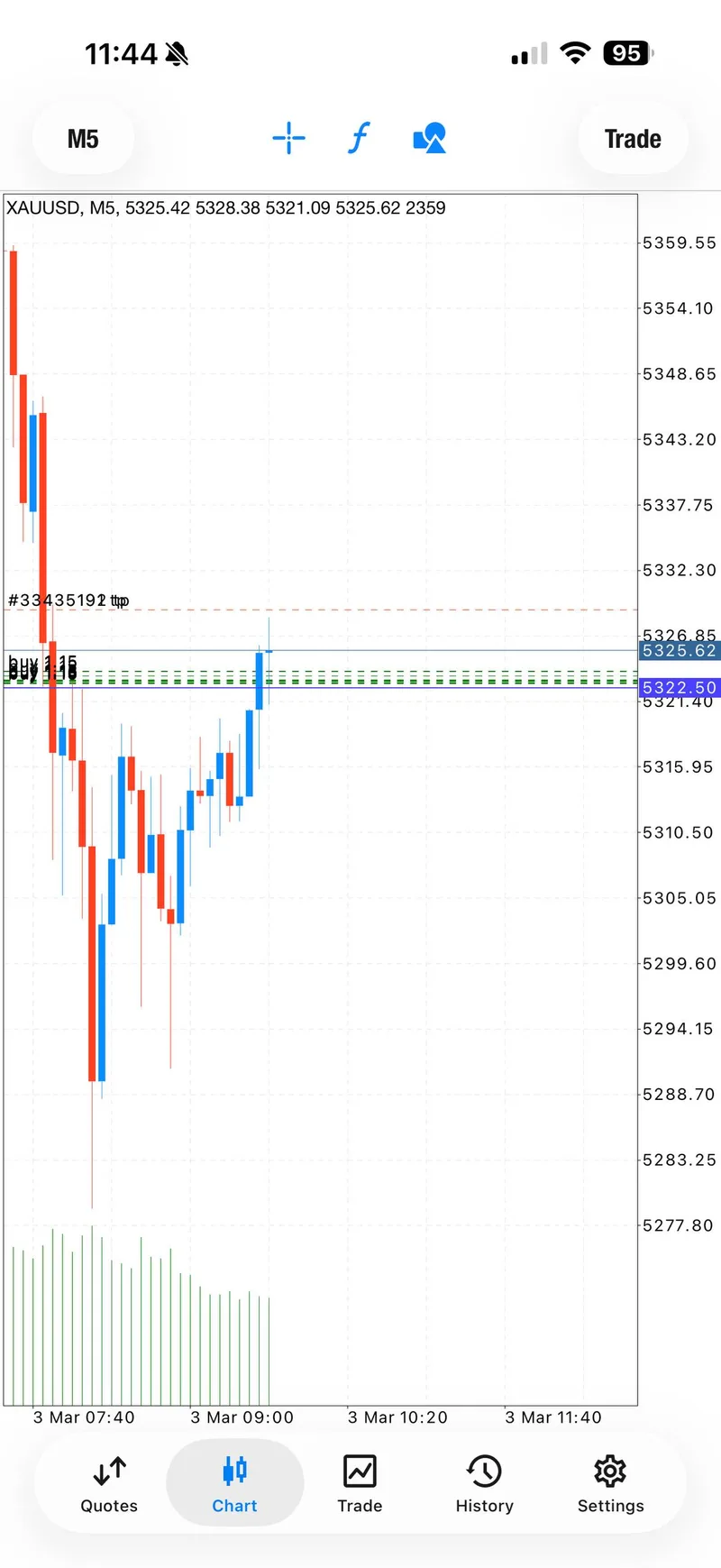
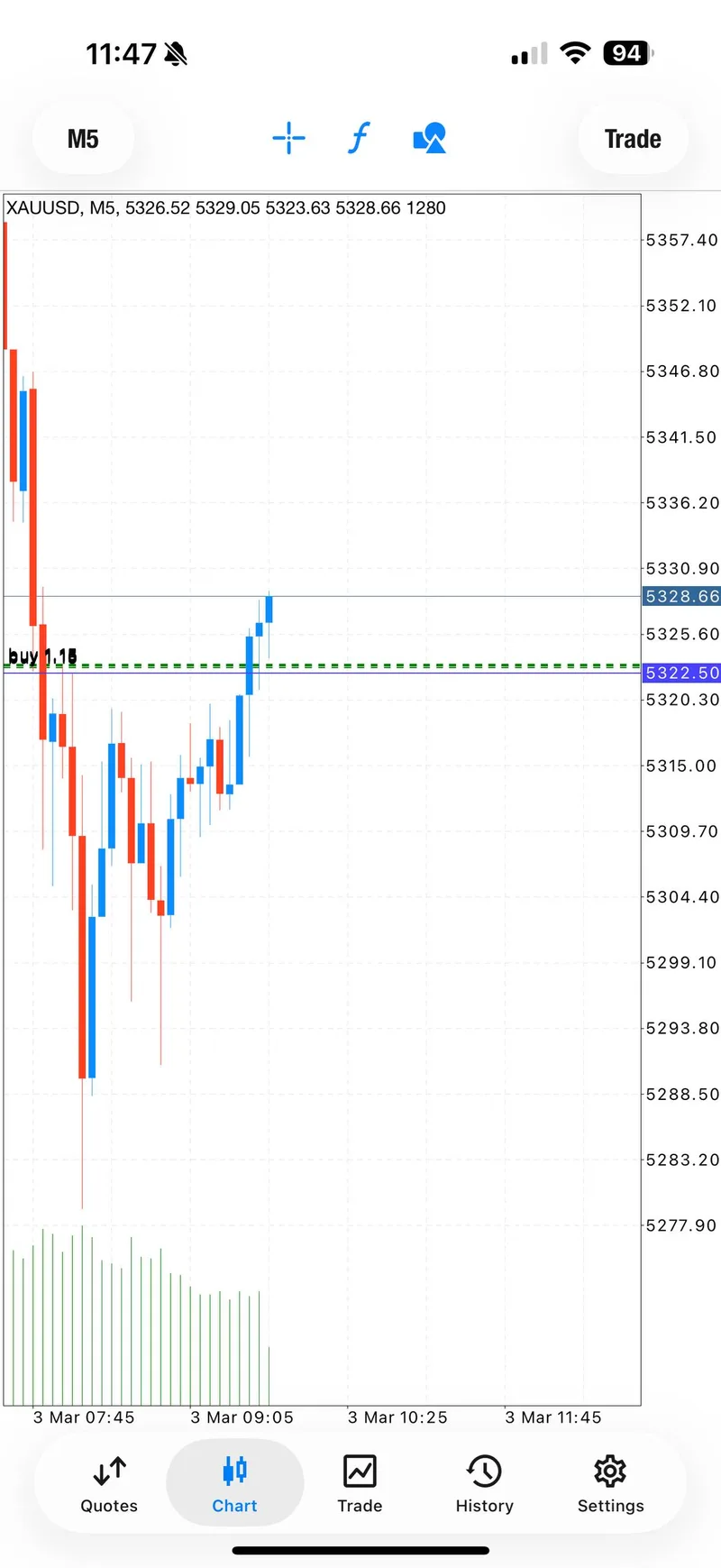
Featured Signal — Signal 1 (Public Channel, 07:43 UTC)#
- Entry: BUY 5323–5320
- SL: 5317
- TPs: 5325 / 5327 / 5329 / open
- Observed progression in chat:
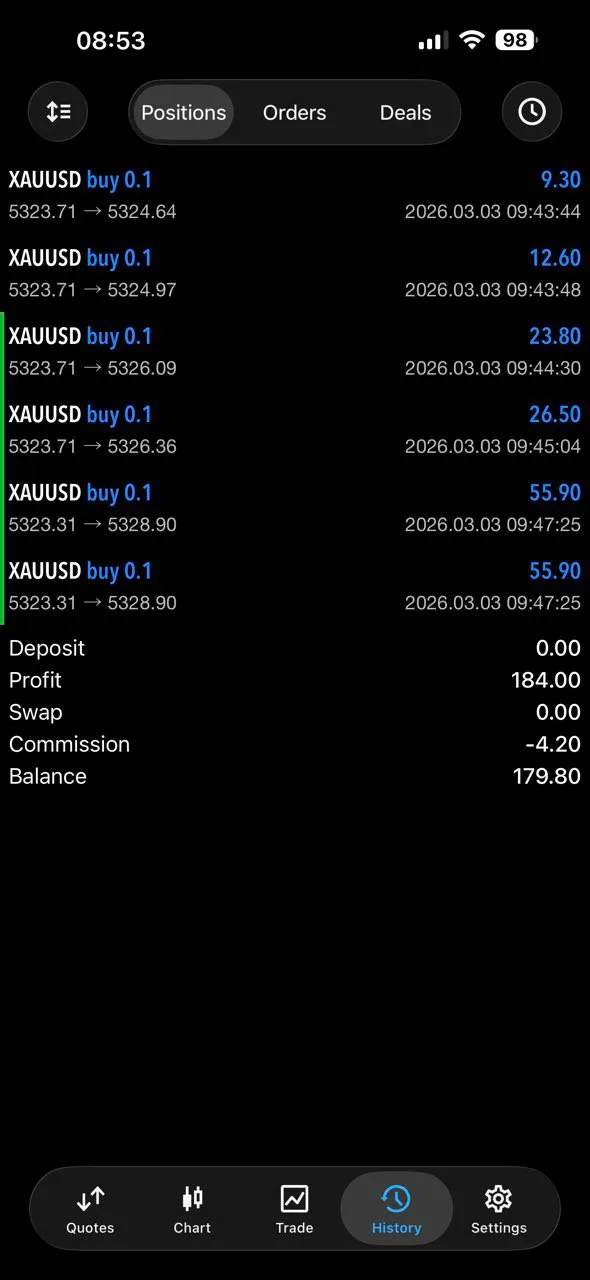
- 07:45–07:47 UTC: TP1 and TP2 hit, then TP3 update confirmed.
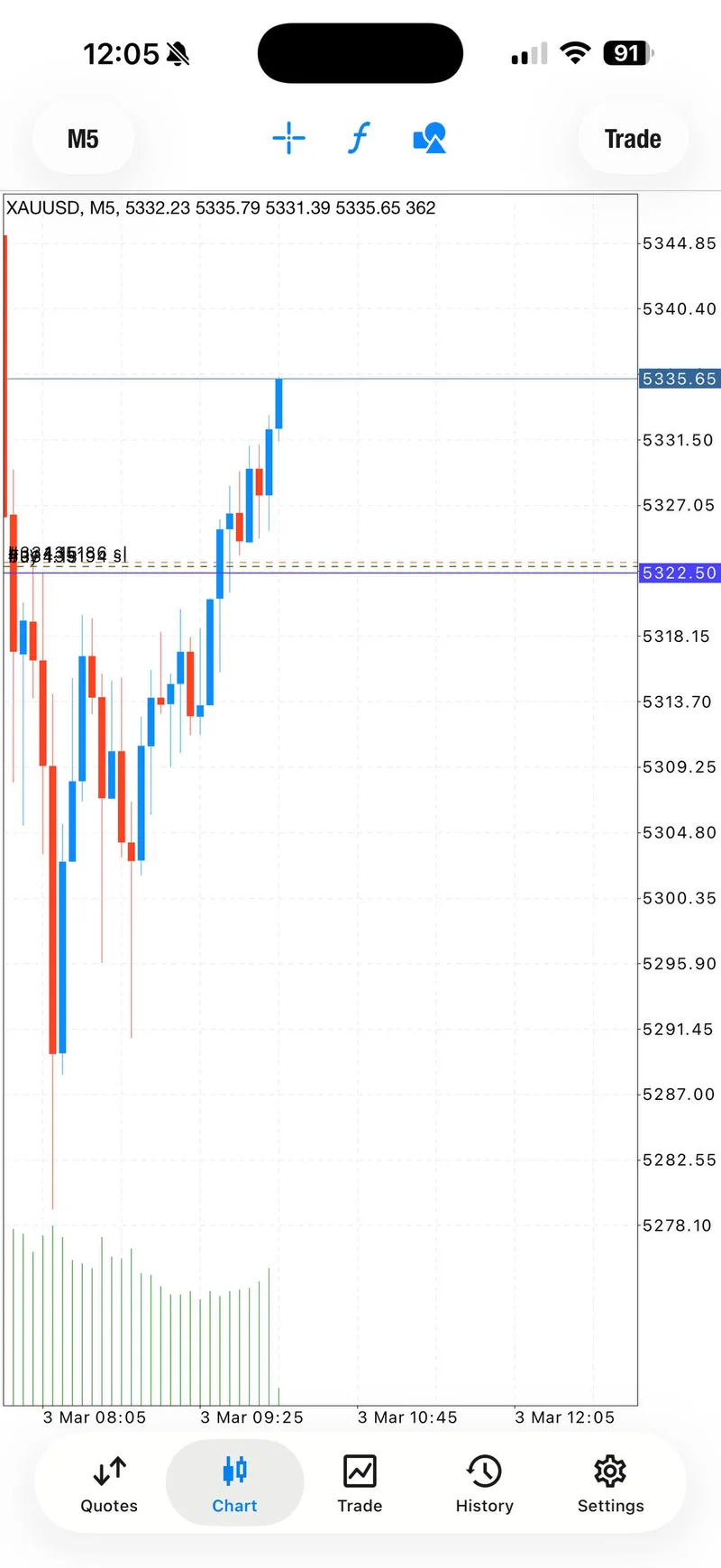
- 07:47 UTC: “Set breakeven & take partial profits.”
- 08:13 UTC: “Breakeven hit.”
- Result: ✅ Partial winner with 130+ pips captured (TP1–TP3 achieved, partials secured, remainder protected at breakeven).
Signals 2–4 — Consolidated Session Review#
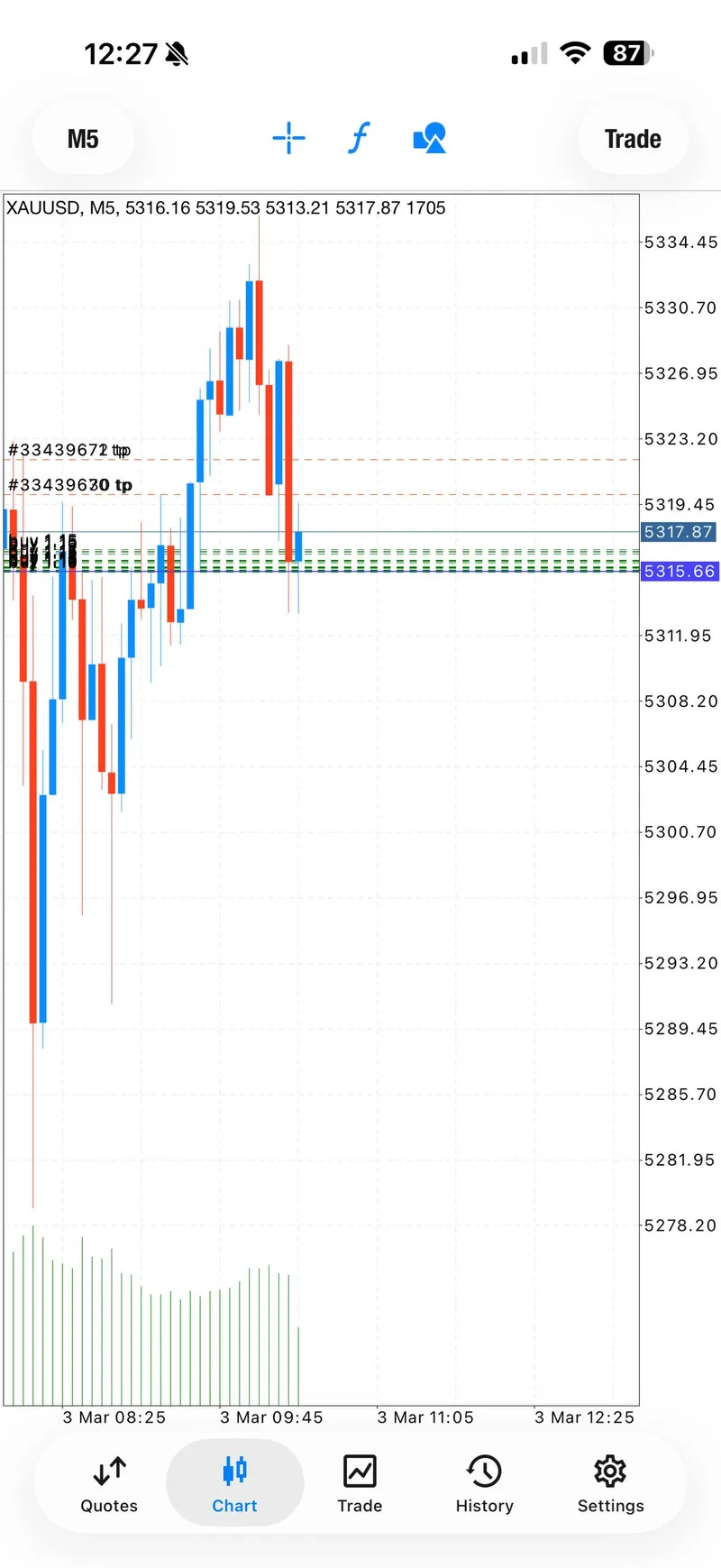
Three additional entries were issued as initial momentum continued. However, as gold entered its steepest correction of the session, all three reached their predetermined stop levels or were closed through risk-managed protective exits. All closures were controlled — no positions were held without protection, and trading was halted once conditions deteriorated.
Day Outcome (Honest Summary)#
- Day summary: 4 signals issued, 1 partial winner with 130+ pips captured, 3 controlled exits with all stops honored. Session closed early when market conditions deteriorated — the mark of professional risk management.
For readers focused on process improvement, today’s case aligns with the principles in XAUUSD execution playbook for volatile sessions: lock partials fast, reduce exposure when tape quality degrades, and stop pressing when the regime shifts.
5. Signal Performance Breakdown#
Why did controlled exits cluster after an early win?#
The short answer is regime transition speed. The first signal benefited from early momentum continuation before the reversal structure fully matured. After that, the tape became unstable and mean-reversion assumptions were repeatedly invalidated by correction momentum.
More specifically:
- Parabolic exhaustion from prior session created a fragile order book where reversal pressure could accelerate quickly.
- Pivot failure (5,217) validated downside control and changed expected behavior for buy-side attempts.
- Volatility expansion reduced reliability of lower-timeframe entries; small timing errors became costly.
- Crowded long positioning increased the probability of stop cascades and emotional re-entry loops.
What was done correctly despite adverse price action?#
- Stops were used and adjusted in real time.
- Communication remained transparent throughout both favorable and adverse phases.
- Session was shut down after conditions became too chaotic.
- Messaging stayed educational: “Learn or earn.”
That combination is what separates professionals from amateurs. Amateurs often overtrade during unstable tape conditions. Professionals accept when the market regime changes, cap downside, and preserve decision quality for the next session.
What Was Done Right#
- All entries had predefined stop-losses — no open-ended risk
- Breakeven protection activated on Signal 1 after TP hits
- Partial profits captured (130+ pips from Signal 1)
- Trading halted after third adverse exit — disciplined session management
- Transparent communication maintained throughout the session
For readers studying practical consistency, compare this learning-day behavior with broader signal mechanics in Gold signal quality framework 2026. The edge is not “never lose”; the edge is “lose small, communicate clearly, survive long enough to exploit high-quality days.”
6. Gold Positioning & Flows#
CFTC Positioning (Context)#
Estimated net long exposure remained extreme at roughly 250,000+ contracts. In plain terms, the market was still long-heavy and therefore vulnerable to fast unwind episodes when momentum turns.
Extreme long positioning is not an automatic sell signal, but it is a risk amplifier. When crowding meets adverse price action, “normal pullback” can convert into air-pocket drops. March 3 price action reflected this profile.
ETF Flow Context#
Late-February flow tone pointed to net outflows as profit-taking increased. That matters because ETFs often reinforce broader sentiment transitions: sustained inflows validate trend persistence, while outflows can accompany de-risking and volatility spikes.
Synthesis for Traders#
- Macro backdrop: Geopolitical risk still supports gold strategically.
- Positioning backdrop: Crowded long exposure increases correction fragility.
- Execution implication: Use adaptive sizing and avoid aggressive layering when the market is in unwind mode.
This is why directional conviction alone is insufficient. Positioning and liquidity conditions determine whether your idea survives long enough to pay.
7. Community Results#
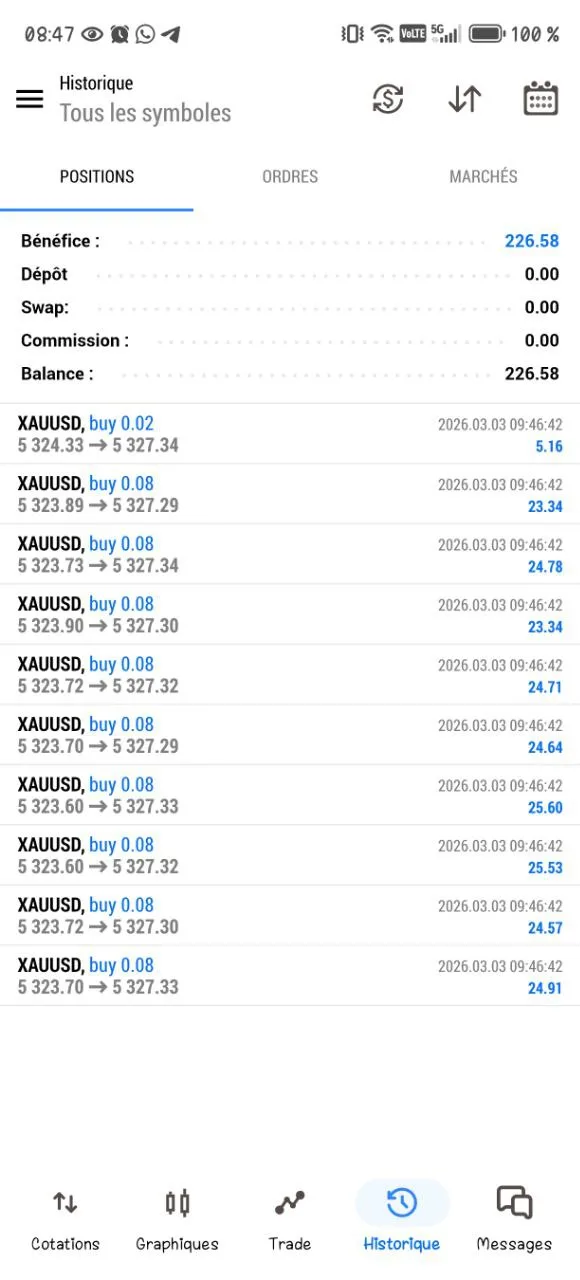
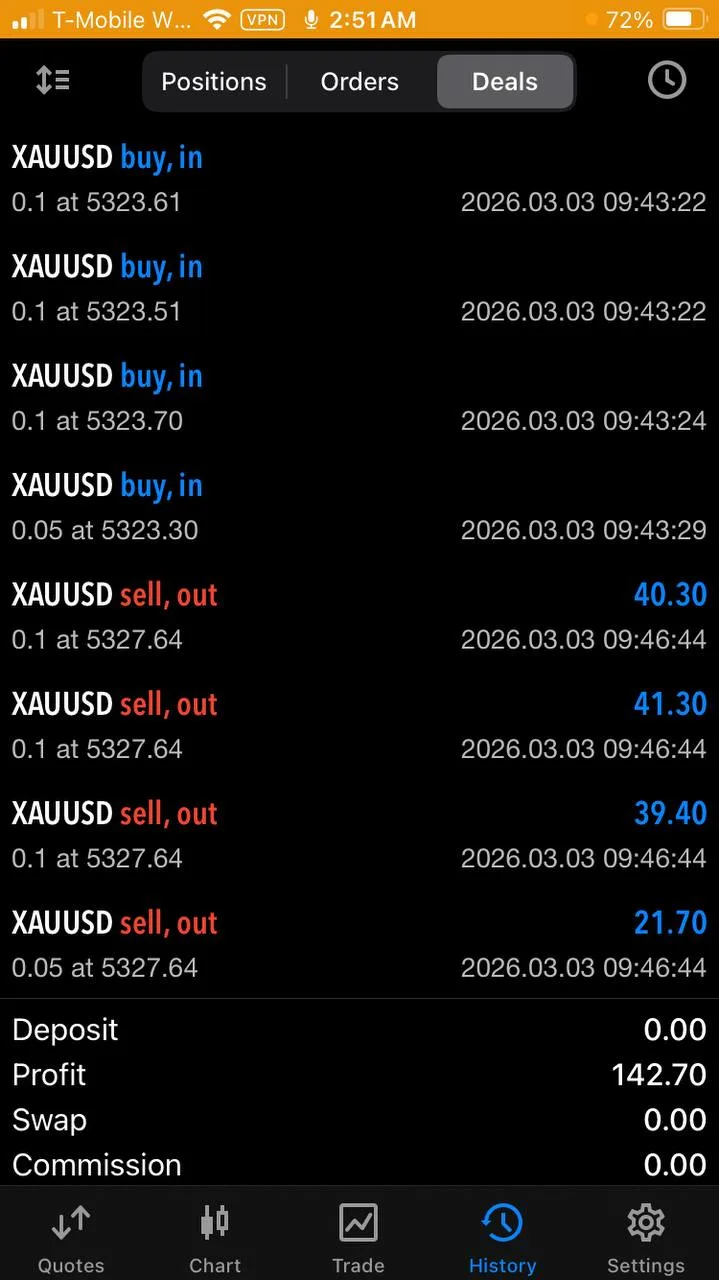
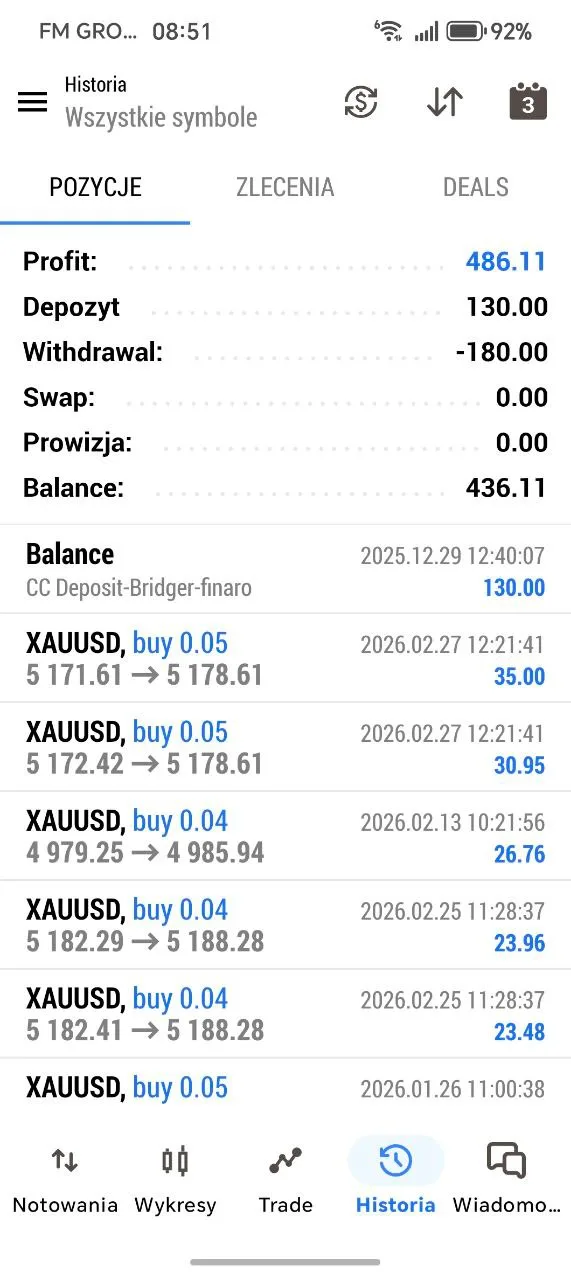
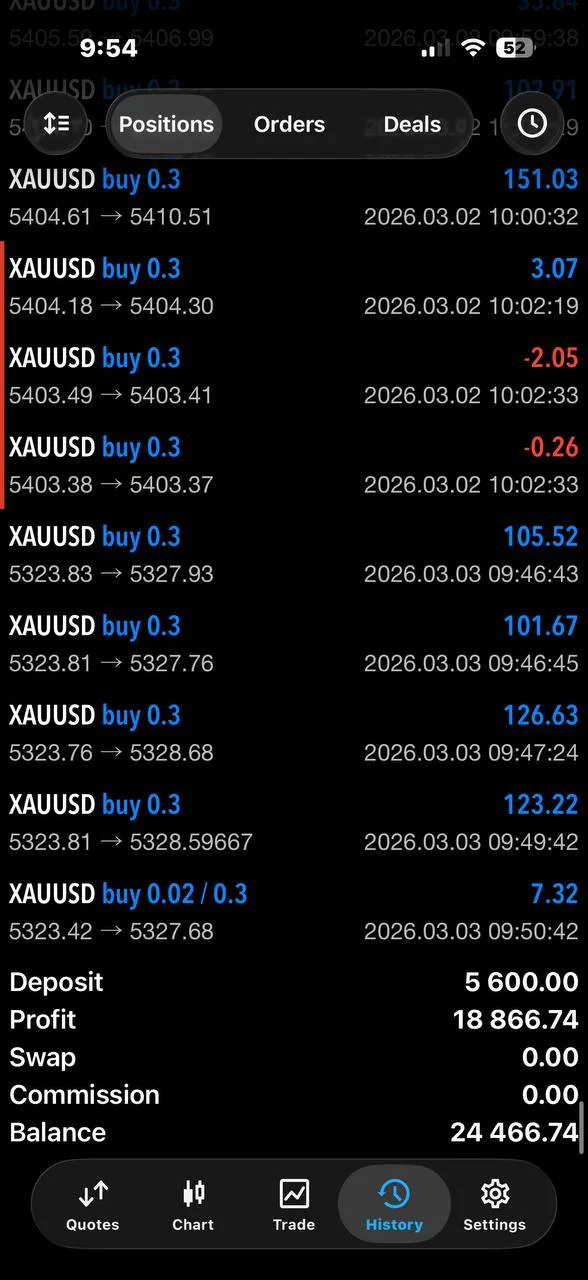
Community sentiment in the early phase was strongly positive, especially after TP prints from the first signal. Several members shared gratitude and progress snapshots, and those reactions are part of the day’s reality.
As volatility expanded later in the session, the tone shifted from celebration to resilience. The important point is not that every setup converted in a straight line; it is that leadership communicated both favorable and adverse developments in real time with risk controls still intact.
Member Reactions (Early Session)#
“@gtmobest the best of the best man like always we make good profits” — iheb ch (07:49 UTC)
“Moooo thank you so much bro we love you” — Brett (07:52 UTC)
“And this is the result after a month, thank you, you are amazing. Regards.” — Arek (07:53 UTC)
“The results speak for themselves… mo you are unstoppable!” — Zane (07:55 UTC)
“I am speechless…bro got talent” — Capo Bogdani888 (07:56 UTC)
Honest Community Context#
Later signals did not maintain early momentum as correction pressure accelerated. As volatility intensified, the session was explicitly reframed as a risk-management day and closed early with disciplined execution. That transparency supports long-term trust more than selective screenshot marketing ever could.
8. Event Risk — Next 48 Hours#
The next 48 hours remain event-sensitive. Geopolitical headlines are likely to dominate intraday direction, but economic releases can still amplify or interrupt those flows.
Primary Risk Vectors#
- Iran retaliation cycle: Reports by March 4 indicate further strikes on US-linked sites and embassies, keeping escalation risk active.
- Strait of Hormuz disruption narrative: Any confirmation shift here can rapidly affect oil, inflation expectations, and risk pricing.
- US data/event flow: Macro prints and policy commentary can trigger sharp dollar and yield repricing even inside a geopolitically driven tape.
Tactical Implications#
- Reduce position size during headline windows.
- Prefer confirmation entries over anticipation in high-volatility conditions.
- Treat stop placement as mandatory, not optional.
- Avoid revenge trading after an SL cluster.
A practical prep step is to review the daily report archive for regime comparison before the next session: identify how breakout days, trend days, and unwind days differ in signal behavior.
FAQ#
1) How does Gold Trader Mo manage risk during volatile sessions?#
Risk control starts before entry: predefined invalidation, staged take-profit structure, and strict stop honoring when market structure breaks. During unstable tape, exposure is reduced quickly, breakeven protection is activated when available, and trading is paused if conditions no longer match the setup profile. The process aligns with the framework in XAUUSD execution playbook for volatile sessions.
2) Why is capital preservation important in gold trading?#
Because longevity is the foundation of performance. Gold can deliver large intraday opportunities, but it can also reprice sharply when positioning becomes crowded. Protecting capital during correction phases allows traders to stay in the game for higher-quality setups, which is a core principle in Gold signal quality framework 2026.
3) What drives gold price corrections of this magnitude?#
Because timeframe alignment matters. Macro narratives influence medium-term direction, but intraday moves are often dominated by positioning, liquidity, and stop cascades. If a market is overbought and crowded long, even bullish macro can coexist with severe correction.
For traders building session-to-session consistency, compare unwind days vs trend days in the daily report archive for regime comparison and focus on how risk rules are applied across both environments.
10. Connect with Gold Trader Mo + Risk Disclaimer#
Connect with GTMO#
Risk Disclaimer#
This content is for educational purposes only and does not constitute financial advice. All trading involves risk, including the potential loss of capital. Past performance and shared screenshots do not guarantee future results. Always use your own judgment, define risk before entry, and only trade with capital you can afford to lose.
March 3, 2026 is a strong reminder that professional behavior is not about avoiding losses entirely. It is about cutting risk when conditions degrade, communicating honestly, and preserving capital for higher-quality opportunities. That is the discipline that compounds over time.
Weekly Summary Context#
This day is part of our weekly gold trading summary for March 2-6.